
A marketer can use AI to produce a draft quickly and still spend the rest of the afternoon moving information between tools.
That is where I would look for the next improvement.
For me, integrating AI into a marketing workflow means deciding how work arrives, what information it needs, who checks it and where the result goes. Generating an output is one step. Getting useful work through the team is the bigger objective.
My background includes project delivery at PokerStars, work around Expo City Dubai and COP28, and workflow implementation. Those experiences are the context I bring to this question. I would assess an AI initiative by how it supports delivery, rather than by how impressive the first demonstration looks.
Start with a recurring friction point
I would resist beginning with a list of AI features. Instead, I would choose a repeated problem that the team can describe clearly.
Perhaps campaign requests arrive without an audience or deadline. Perhaps someone rewrites the same brief for several channels. Perhaps a weekly report takes time to assemble but gives its reader no clear decision.
These are hypothetical examples. Each suggests a different intervention, and none automatically requires a complicated agent.
I would record how the work happens today: who starts it, what they provide, where it waits and what counts as finished. If that picture is unclear, connecting more tools is likely to make the confusion harder to see.
Design the handovers before the prompts
Consider a hypothetical campaign request. I would want an agreed form to capture the objective, audience, offer, available evidence, deadline and owner.
AI could then identify missing information and prepare a structured draft brief. The requester would resolve the gaps, and the campaign owner would approve the brief before creative production begins.
That gives the AI step a defined input, output and destination. It also makes the exceptions visible. An unsupported claim should become a question for the owner, not a confident sentence that slips into the campaign.
The sequence matters more than a particularly clever prompt. A useful draft in the wrong project, or a final version nobody knows has changed, still creates work for someone else.
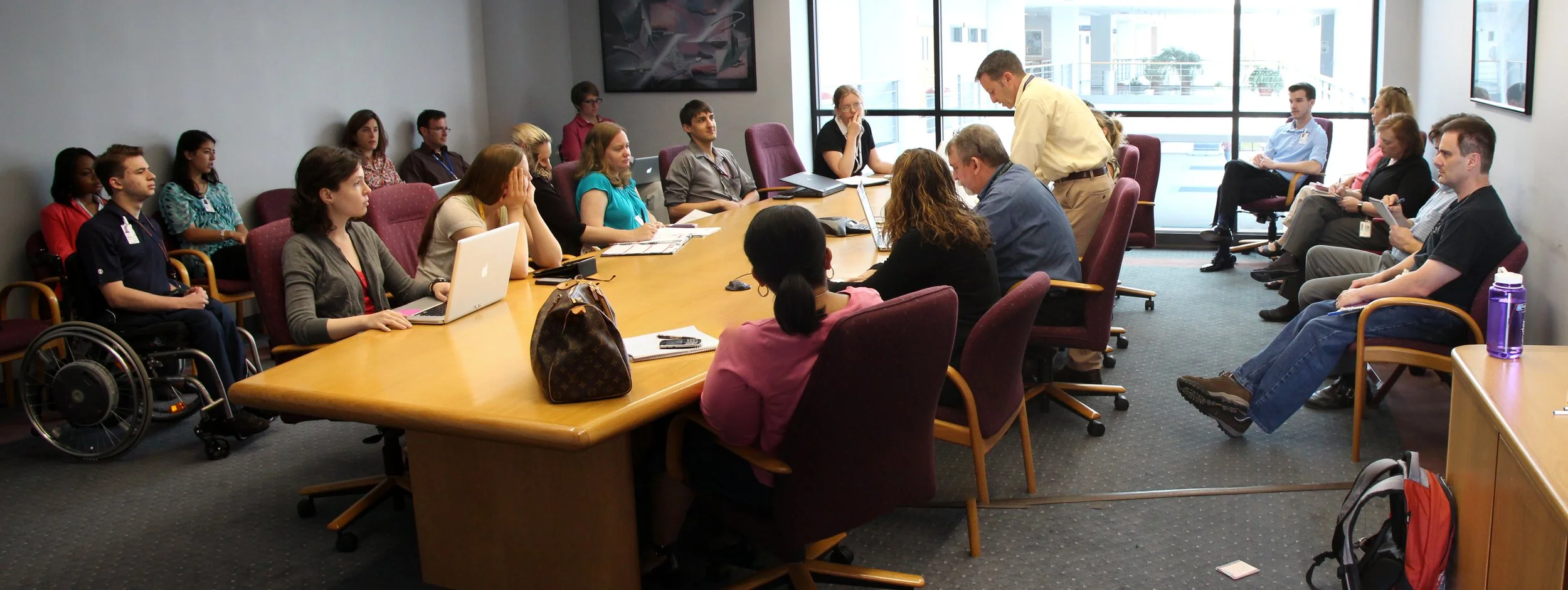
An illustrative team meeting, photographed in 2013; these are not James’s colleagues. Photo: woodleywonderworks, Wikimedia Commons, CC BY 2.0. Uses the existing Commons image, displayed smaller; no further edits.
Put the review where it changes the outcome
I would decide which checks need a person and make them part of the workflow.
A factual claim needs evidence. A campaign promise needs someone able to confirm delivery. A final customer-facing asset needs an accountable owner. The reviewer also needs the source material and a clear explanation of what changed.
Asana’s documentation on human-in-the-loop workflows describes using approval checkpoints, including a marketing example where work pauses for draft review before proceeding. That is a useful product example of making a handover explicit, rather than relying on someone to notice a message.
I would apply the principle in the system a team actually uses. It does not depend on buying a particular platform, and it does not mean placing an approval on every small step. The check should sit where a mistake would affect the next decision or reach the customer.
Give the workflow reliable context
I would provide approved brand guidance, current product information and examples of accepted work. I would also make it clear which source wins when documents disagree.
For example, a campaign draft should not infer an offer from an old presentation. A report should not silently combine figures with different definitions. A workflow needs a route for missing or contradictory information.
Access matters too. I would agree what information the AI step needs and who can see its output, using the organisation’s approved tools and data rules. Passing an entire shared drive into a process is not a substitute for deciding what is relevant.
Measure the work that reaches completion
I would measure the full journey, including review and correction, rather than reporting only how quickly the first draft appears.
Useful measures could include time from request to accepted brief, the number of clarification rounds and how often the final output needs substantial rework. I would also ask the people doing the work whether the process is easier to understand.
A short pilot with one recurring workflow would give me more useful evidence than a broad launch across the department. I would agree a review date and decide whether to improve, expand or stop it based on that evidence.
Make someone responsible for keeping it useful
An integrated workflow needs an owner after launch. Brand guidance changes. Offers expire. Teams move. A prompt that worked against one set of inputs may need revising when those inputs change.
I would keep a simple record of failures and fixes, and give colleagues a clear way to flag problems. The aim is a process the team can maintain, not one that depends on its original builder remembering every detail.
This builds on Great Marketing Starts With Great Processes, Not Just Great Ideas. My first move would be to choose one repeated handover, define the information and owner, and test whether AI helps the work reach a better finish.