
When I look at a brand, I want to understand what it helps a customer expect.
The logo matters. So do the words, colours and imagery. But I would also ask what happens after someone believes the message and takes the next step.
Does the booking process feel as straightforward as the campaign suggests? Does the sales conversation support the positioning? Does the experience give people a reason to choose the business again?
My background spans sport, hospitality, agencies and multi-brand marketing. Across those settings, a brand appears in more places than the creative department can control on its own. That is why I would bring branding into operational decisions, rather than leaving it inside the design brief.
Start with the expectation you create
I would begin a brand review by completing one sentence: customers should choose us because they can expect this particular thing from us.
The answer needs to mean something in the category. “Quality” is difficult to use if nobody can explain what it changes. “Easy to book for a large group” gives a hospitality team something more concrete to work towards.
That is a hypothetical example, not a claim about a business I have worked with. Its usefulness is that we can test it. Can someone find the group information? Is the response clear? Can the team deliver what the customer has been promised?
I would rather agree one credible expectation than approve a list of attractive adjectives that never influence a decision.
Recognition gets you noticed; delivery gives it meaning
McDonald’s offers a useful external example of how a recognisable identity can extend into a wider system. In its account of the work, Turner Duckworth describes an identity shaped by the Golden Arches, reaching across touchpoints including restaurants, sub-brands and loyalty activity.
I am interested in the connection between the visible asset and the places people meet it. A brand system becomes more useful when it helps different teams make related decisions.
The photograph below is an older Sydney restaurant, not an illustration of that later redesign. It shows how branding is encountered in a real place: a sign, an entrance and an environment someone has to navigate.
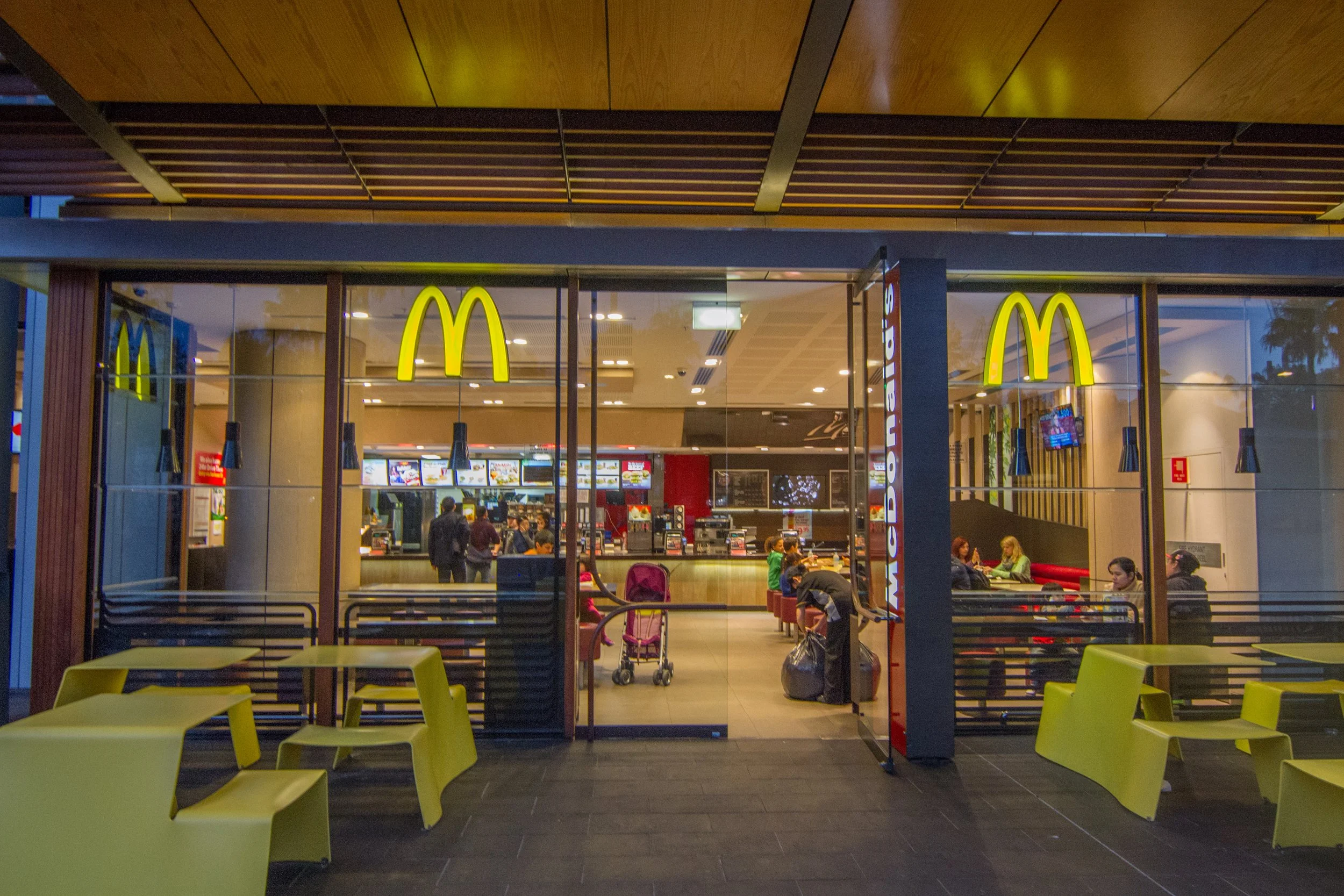
McDonald’s at Darling Harbour, Sydney, photographed in 2014. Photo: Maksym Kozlenko, Wikimedia Commons, CC BY-SA 4.0. Displayed smaller; no other edits.
For a smaller business, I would ask the same practical question: what should the customer recognise, and what should that recognition lead them to expect?
Look for the moments where the promise weakens
My experience at Leeds Rhinos gives me a sporting context for thinking about this. A campaign can create interest, but the supporter journey also includes finding information, buying a ticket and arriving at the venue.
In hospitality, the equivalent might be an enquiry, a booking confirmation or the welcome on arrival. In an agency, it might be how a proposal becomes a working relationship.
I would map those moments with the people who own them. Where is the customer being asked to repeat information? Where does the language become confusing? Where does a premium promise meet an impersonal response?
These are questions I would investigate, not assumptions about any particular former employer. The point is to make the brand review specific enough to produce work someone can own.
Give colleagues a decision they can use
A useful brand guide should help a colleague choose between two plausible options.
If the brand promises clarity, I would expect that to influence an offer, a form and a customer email. If it promises expertise, I would look for evidence and useful explanation rather than simply adding more confident language.
I would translate the positioning into a few practical examples: how we explain price, how we respond when something goes wrong and how we make the next step clear.
Then I would test those examples with people outside marketing. If a colleague needs a long presentation before they can apply the idea, the guidance probably needs another pass.
Make ownership part of the brand work
My agency and multi-brand background makes ownership an important part of how I would approach this. Marketing can set direction and create assets, but it cannot personally deliver every customer interaction.
I would give each priority improvement an owner and a review date. A booking issue belongs with the people able to change booking. A confusing proposition needs commercial and marketing input. A design inconsistency needs someone responsible for the system.
This connects with One Brand, Every Channel. Consistency helps people recognise the business; clear responsibility helps the business live up to that recognition.
My starting point would be a small audit: choose one promise, follow one customer journey and identify three moments where the experience could support it more clearly. Fix those before treating a new visual identity as the whole answer.