
I recently shared a thought on LinkedIn: with all the attention around GTA VI, what could real-world sponsorship look like inside a world such as Vice City?
Actual car brands. Recognisable shops. Branded billboards. Perhaps an event that gives players something enjoyable to take part in.
From a marketing perspective, I find the possibilities fascinating. But the more interesting question is what a brand would contribute to the experience. A familiar logo might attract attention. Giving someone a reason to enjoy that brand's presence is a much stronger starting point.
These are ideas I would explore, rather than a description of confirmed GTA VI integrations. I am not suggesting Rockstar has announced the examples above, or that I know its commercial plans.
The partnership opportunity already extends beyond the screen
Miami HEAT announced a Rockstar partnership around an 18 November event, connecting basketball with Vice City.
That is a useful distinction: a partnership around a game is different from paid placement within its world. Both can create interesting opportunities, but I would assess them separately.
My background includes sport at Leeds Rhinos, project delivery at PokerStars and hospitality marketing. Those different settings shape the questions I would ask: who is the audience, what are they there to do, and how does the brand make that occasion better?
A fan attending a match, a guest visiting a restaurant and someone settling into a game have different expectations. The commercial idea needs to fit the occasion.
Start with something a player would actually want
If I were developing a gaming partnership brief, I would start with the player benefit before discussing visibility.
A car partnership could offer a distinctive driving experience. A fashion collaboration could give someone an item they want to wear. A branded event could introduce a challenge worth completing. These are hypothetical routes, each requiring the developer's agreement and creative direction.
I would ask a simple question: if we removed the logo, would the activity still be enjoyable?
If the answer is no, the idea may be relying too heavily on the size of the audience. A large potential reach does not automatically make a placement relevant.
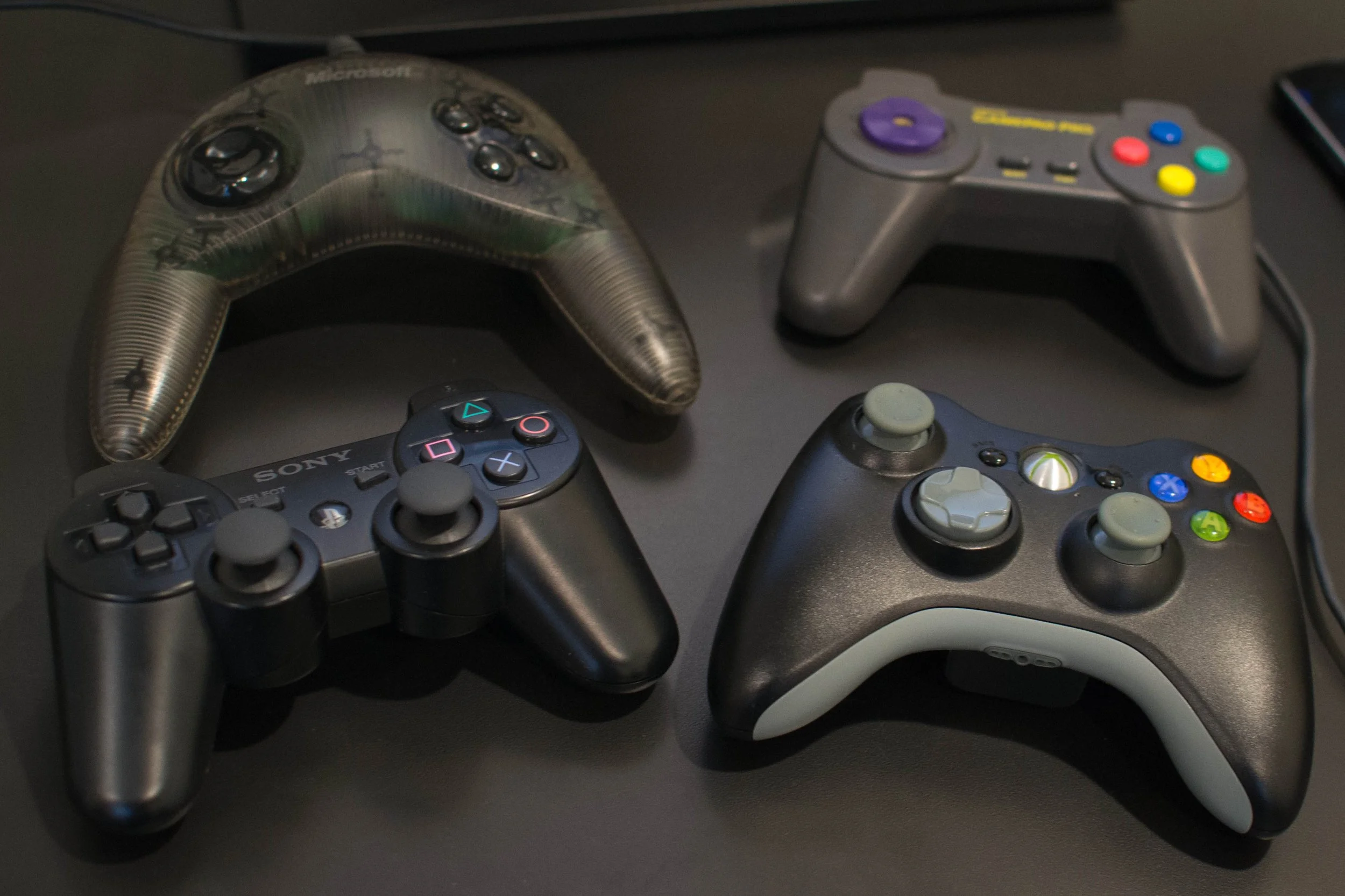
A selection of older game controllers, photographed in 2013; an illustration of gaming hardware, not GTA VI imagery. Photo: Ted Mielczarek, Wikimedia Commons, CC0.
Nike offers a useful example to think about
There are established examples outside GTA. In its 12 February 2024 account of Airphoria, Epic describes Nike's collaboration with Beyond Creative and the Epic Innovation Lab: a virtual sneaker hunt built using Unreal Editor for Fortnite.
What interests me is the connection between the brand and the activity. Sneakers gave the experience a subject, while exploration and collecting gave players something to do. This was a specific historical Fortnite project, not evidence of a Nike agreement with Rockstar.
I would take the principle into a brief rather than copy the execution. The useful question is where a brand's identity can become an interesting part of play.

Nike store signage photographed in 2020; a real-world brand illustration, not an Airphoria screenshot or a GTA VI sponsorship announcement. Photo: Rick Obst, Wikimedia Commons, CC BY 2.0. Displayed smaller; no further edits.
The setting has to make sense for both sides
I would also expect a serious conversation about context. A brand needs to understand the tone of the world it is entering and the situations in which its products might appear.
Equally, the developer needs room to protect the creative experience. If every scene has to accommodate a sponsor's preferred message, the partnership can become a constraint on the thing people came to enjoy.
For a world built around satire, that discussion becomes particularly interesting. Would a real brand be comfortable with the treatment? Would its presence fit the fiction? Would players see it as a natural detail or a commercial intrusion?
Those questions belong in the initial conversation, alongside the creative opportunity. I would want clear boundaries on placement, changes, duration and what happens if either side needs to withdraw.
Measure whether the partnership earned its place
I would build measurement around the intended role. If the objective is participation, I would look at whether players choose to engage and return. If it is brand awareness, I would want research that examines recall and perception, with clear limits on what can be attributed to the activity.
An appearance on screen is only one signal. A screenshot containing a logo does not tell me whether someone noticed it, liked it or changed their view of the brand.
I would also listen for the wrong kind of attention: players feeling interrupted, confused or pushed towards a purchase they did not come to make. That feedback should inform the next version of the experience.
My starting point would be the experience
My LinkedIn post began with a commercial opportunity. Thinking it through, I would put the creative fit at the centre of that opportunity.
This connects with my wider view on the processes behind good marketing: a strong idea needs clear responsibilities and a workable delivery plan.
Gaming gives brands an interesting chance to participate in something people actively enjoy. I would want any partnership to earn that invitation through an activity, detail or benefit that belongs there. That is the version of real-world sponsorship I would be interested to see developed further.